BICARBONATE OF SODA
Give it an acid
Bicarb is pure sodium bicarbonate. Recipes with an acidic ingredient, such as buttermilk, lemon juice or honey, usually use it to make the gas.
Check your bowlKITCHEN CHEMISTRY
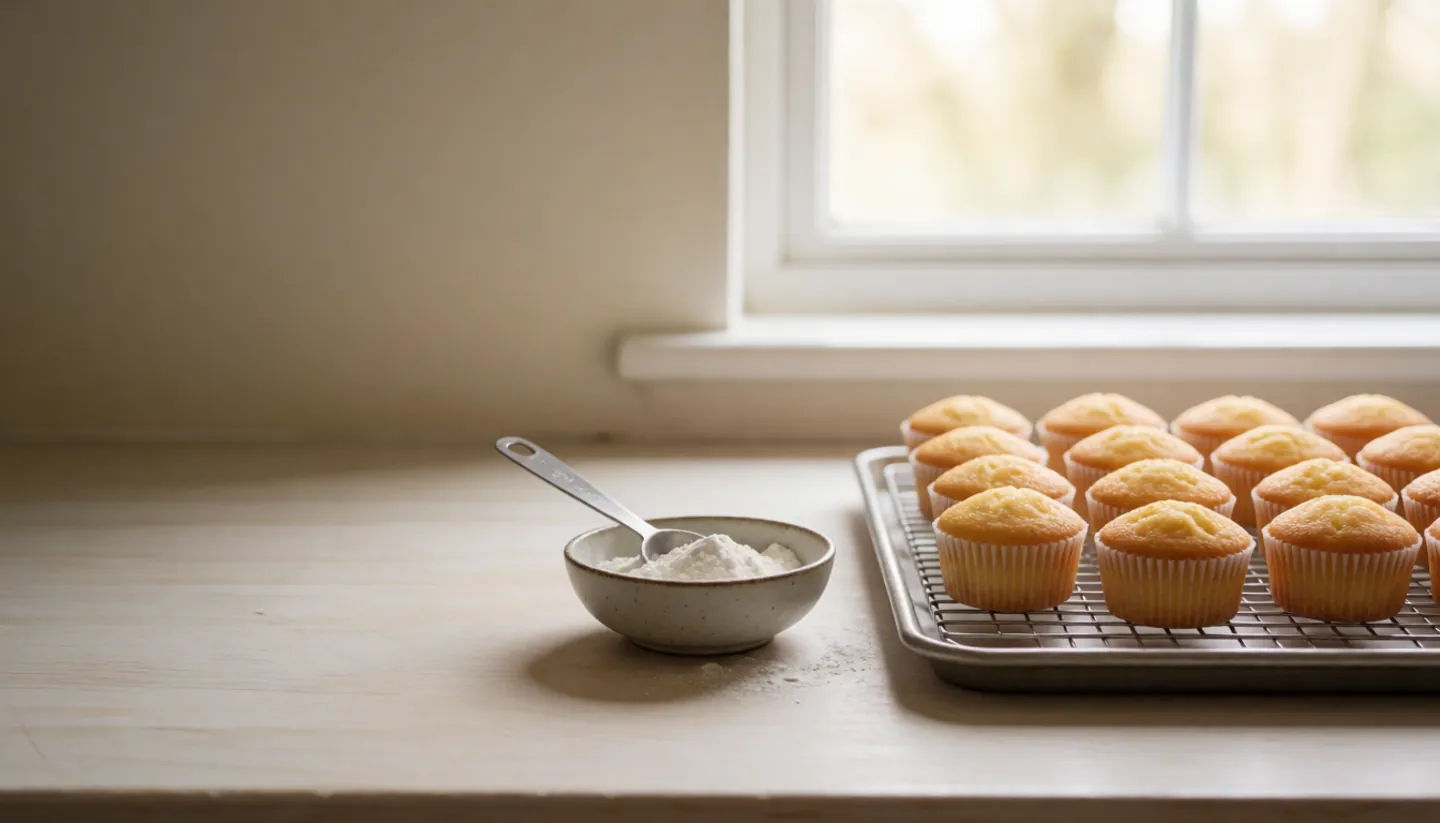
Every fluffy fairy cake starts with a little white powder.
Bicarbonate of soda and baking powder both release carbon dioxide, but they need different triggers. Knowing which one a recipe uses, and why, explains most flat or soapy bakes.
CO2 LIFT acid, heat or both
THE SHORT ANSWER
Both powders rely on sodium bicarbonate.
What changes is how the gas gets released.
BICARBONATE OF SODA
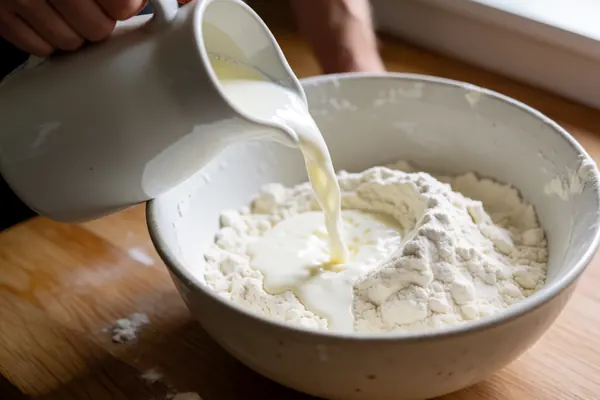
Bicarb is pure sodium bicarbonate. Recipes with an acidic ingredient, such as buttermilk, lemon juice or honey, usually use it to make the gas.
Check your bowlHEAT
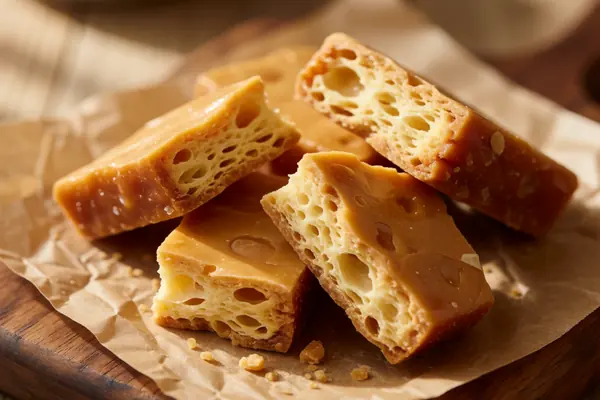
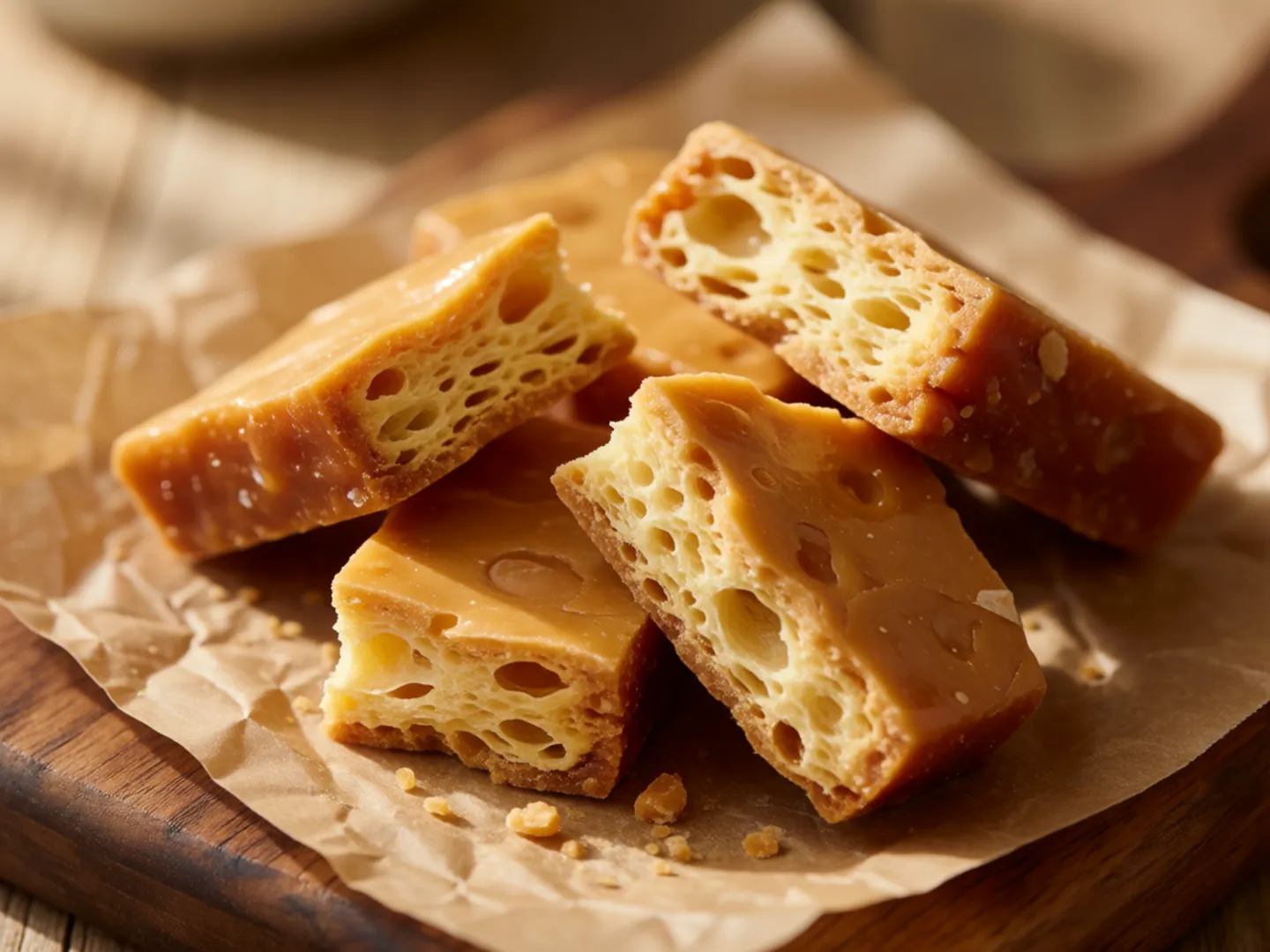
Heated on its own, bicarb breaks down into sodium carbonate, water and carbon dioxide. That is what puffs up honeycomb in the pan.
See the numbersBAKING POWDER
Baking powder is bicarb mixed with a powdered acid. Moisture and heat set it off, so it works in recipes with no acidic ingredient.
Use it wellA QUICK RECIPE CHECK
Pick the kind of recipe to see which raising agent usually does the work. The bar shows how much the recipe leans on bicarbonate of soda rather than baking powder.
General kitchen chemistry from university and Royal Society of Chemistry teaching sources. Always follow a tested recipe's own amounts.
TWO NUMBERS WORTH KNOWING
One figure on strength,
one on the heat that sets bicarb off.
4× stronger
Leavening power, bicarb vs baking powder
North Dakota State University Extension says baking soda has four times the leavening power of baking powder, and about 1/4 teaspoon of soda is enough to leaven a cup of flour.
STRENGTH · NDSU EXTENSION
≈ 80°C
Where bicarb starts to break down
McGill's Office for Science and Society puts the minimum temperature for the heat reaction at around 80°C (180°F), well below normal baking temperatures.
HEAT · McGILL OSS
With an acid, bicarb releases one molecule of carbon dioxide for each molecule of sodium bicarbonate. With heat alone it takes two molecules to release one, so the acid route gets more lift from the same amount.
FOUR HABITS FOR A GOOD RISE
Raising agents are measured in teaspoons, so small slips show. These habits come from the same extension and chemistry sources.
A heaped teaspoon of bicarb can give heavy or fallen cakes and bitter or soapy-tasting cookies.
Bicarb needs an acidic ingredient; baking powder is the reliable choice when the recipe has none.
Baking powder holds less bicarbonate per spoonful, and soda needs extra acid. Any swap changes taste and texture.
Stir cookies and quick breads only until combined: mixing develops gluten and makes them tough.
FAST, SLOW AND DOUBLE
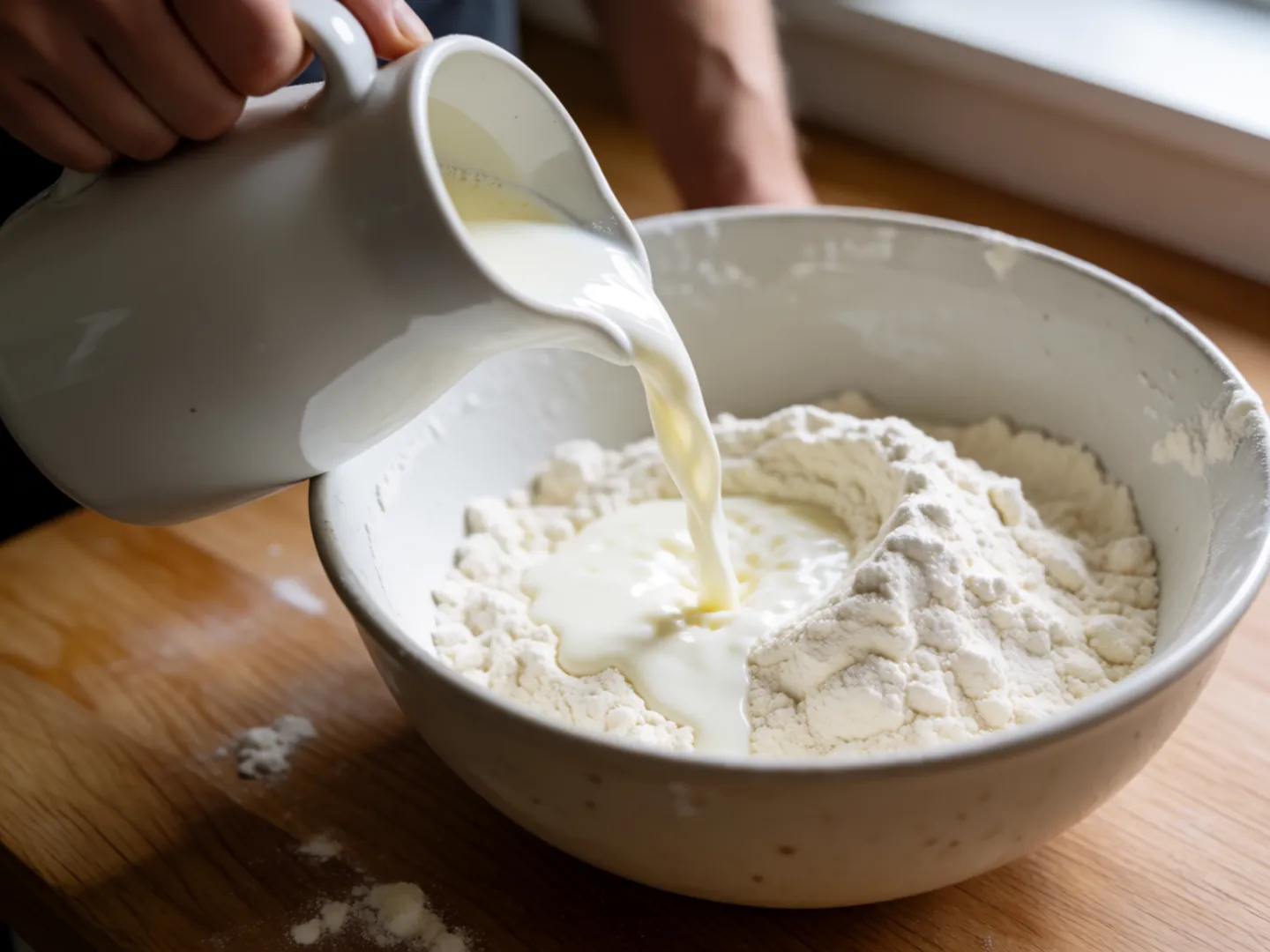
Baking powders are classed as fast or slow acting. Slow-acting powders may use acids such as sodium aluminium sulphate or anhydrous monocalcium phosphate, and make little gas until the mixture is heated.
Double-acting powder contains two acids: one dissolves quickly and starts the rise in the bowl, the other works again in the oven. The British chemist Alfred Bird made an early baking powder in 1843, for a wife who could not eat yeast.
Questions
Bicarbonate of soda (baking soda) is pure sodium bicarbonate. Baking powder is sodium bicarbonate combined with a powdered acid, so it reacts with moisture and heat without needing an acidic ingredient in the recipe.
When a recipe has an acid, bicarb reacts with it. Baking powder may be added too so that some of the acid, for example from lemon juice, is left behind for flavour, while the powder still gives a reliable rise.
Only with adjustments. Baking powder contains less sodium bicarbonate per spoonful, so more is needed, and bicarb used in place of powder needs an added acid such as cream of tartar. Taste and texture may change.
Too much bicarbonate of soda, or not enough acid for it to react with, can leave bitter or soapy flavours. NDSU Extension warns that a heaped teaspoon can also give heavy or fallen cakes.
They are raising agents on the UK list of approved additives: E500 is sodium carbonates and E503 is ammonium carbonates. Diphosphates (E450) and calcium phosphates (E341) are listed too.
Sources
ABOUT THIS NAME
bittybitesbaker.com is part of the DoodleSale portfolio. It isn't in an auction right now, but you can ask about leasing it.